
Storm Restoration · Full Envelope Rebuild
Storm-Ready Roof
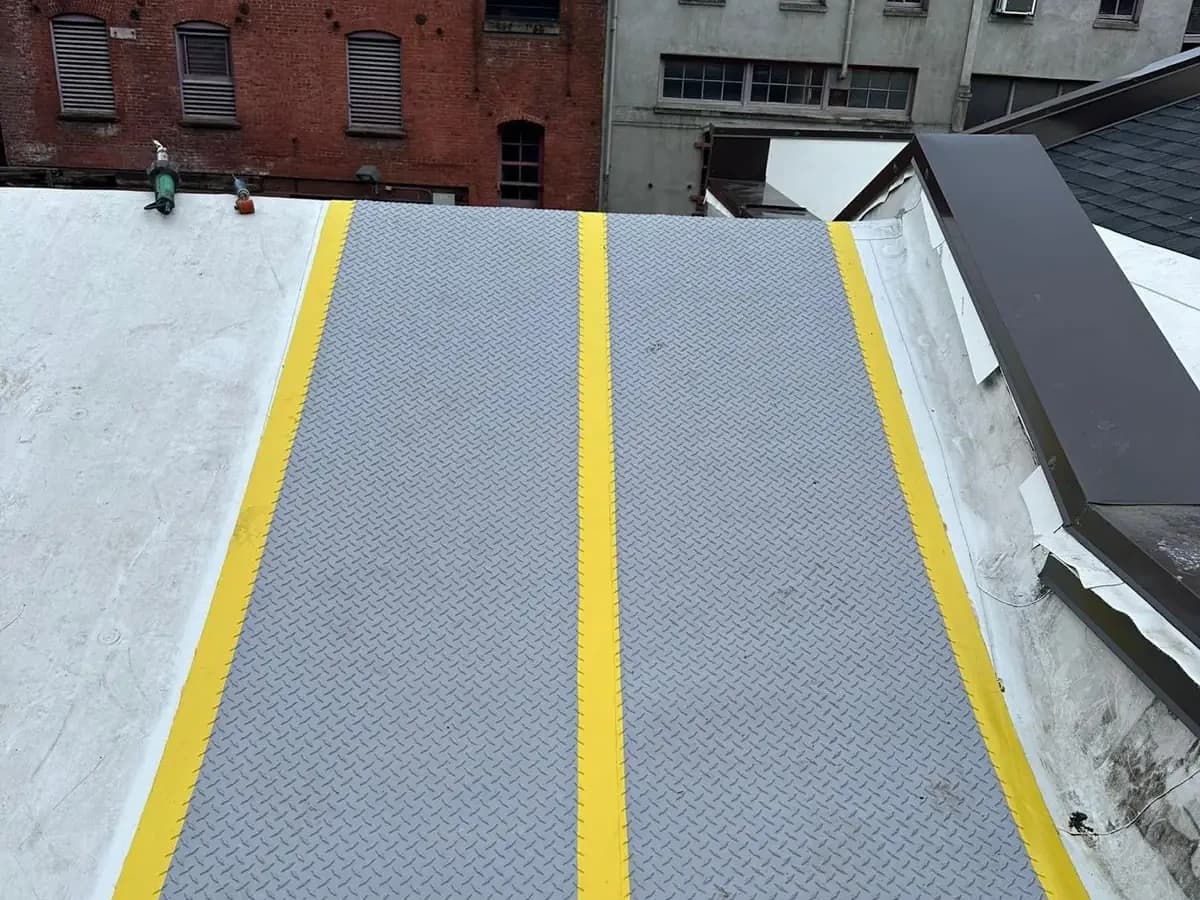
A 2,400 sq ft Hillsboro roof and envelope rebuild after a derecho-class wind event tore off forty squares of shingles in a single night.
- Location
- Hillsboro, OR
- Size
- 2,400 sq ft conditioned + 240 sq ft attached garage roof
- Project type
- Storm restoration — full tear-off, deck repair, envelope rebuild
- Duration
- 11 days on site (insurance scope), 4 weeks insurance approval
- Completed
- 2026
- Credentialed scope
- Tear-off, deck repair, full underlayment system, CertainTeed Landmark Pro shingle, ridge and intake ventilation, gutter and downspout replacement, flashing tie-ins, soffit and fascia repair
The challenge
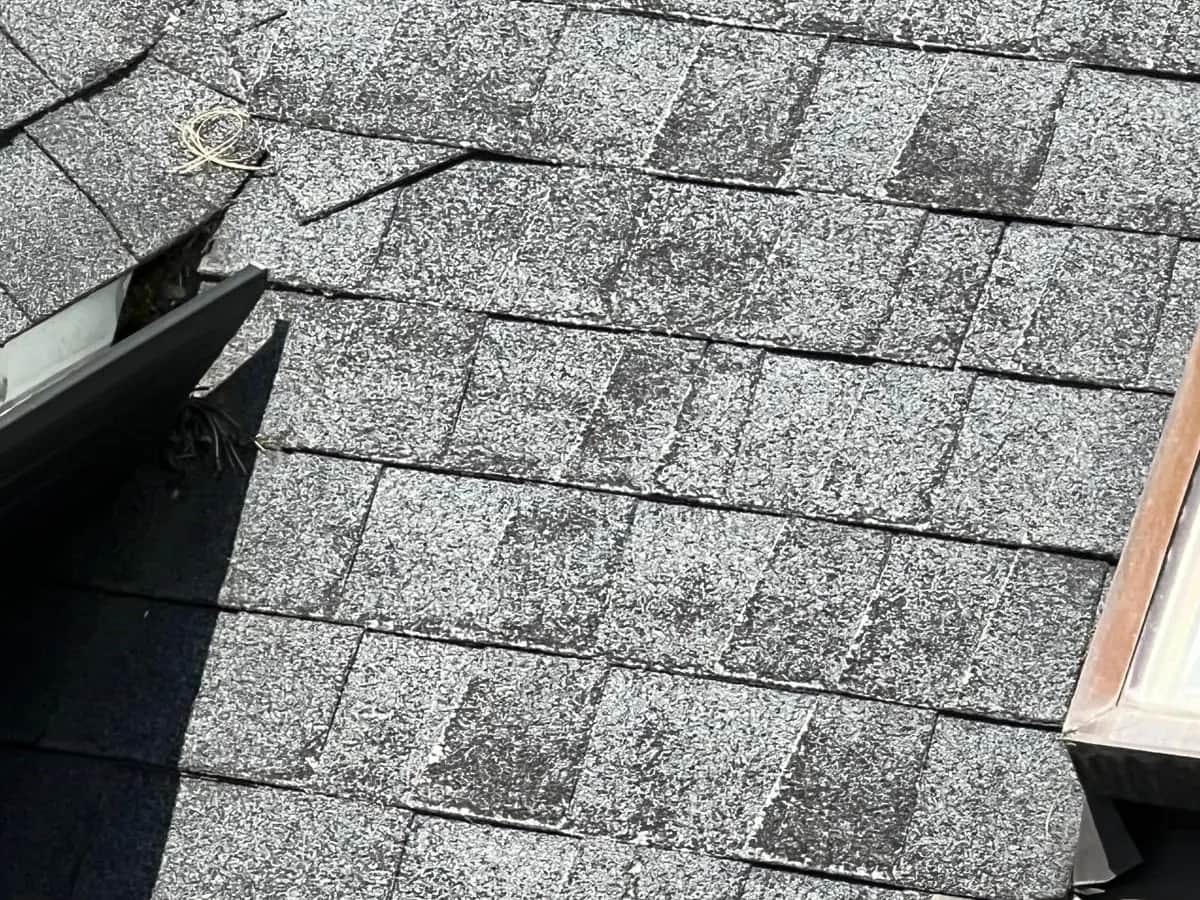
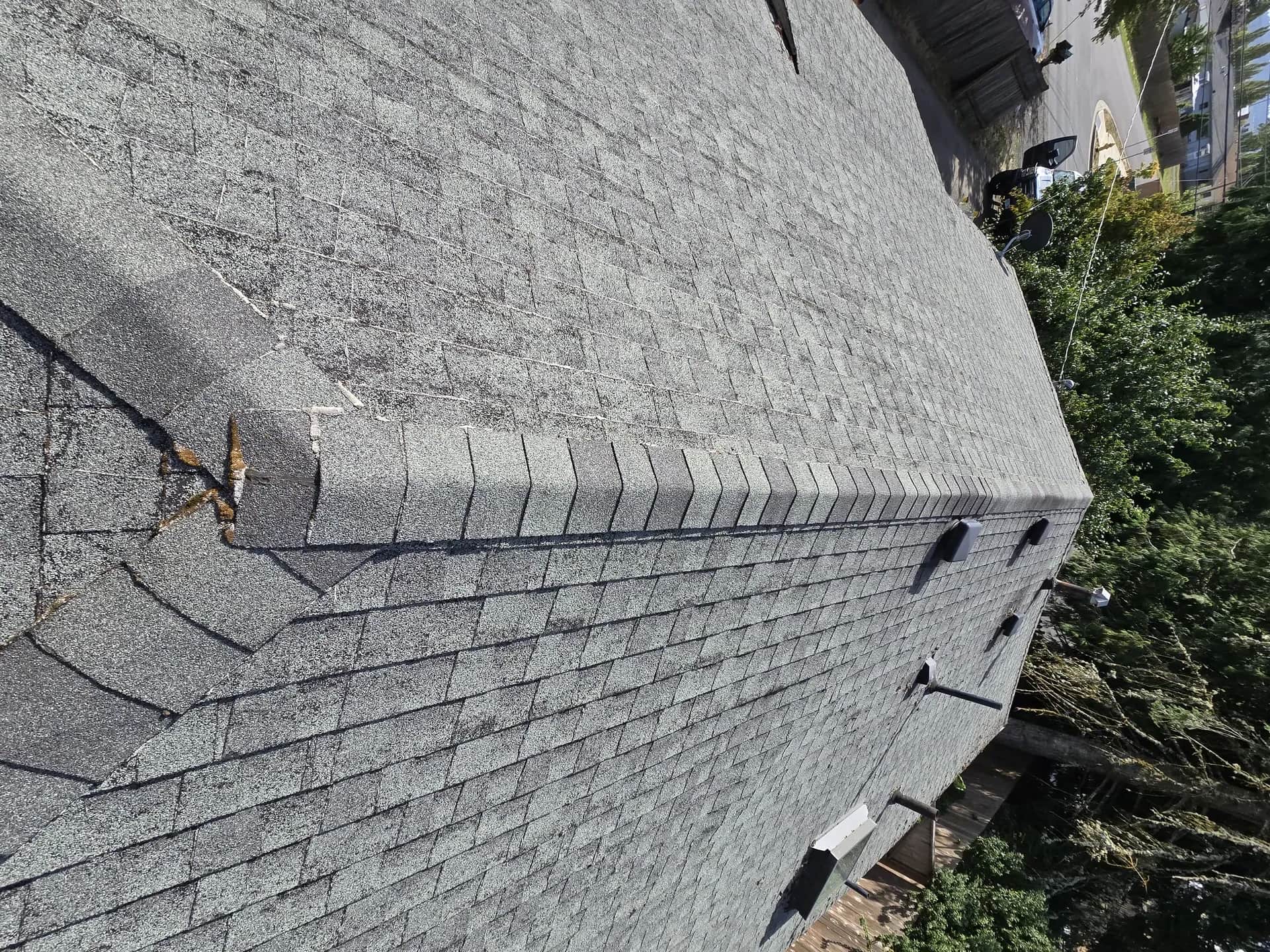
The call came in on a Tuesday morning, the day after the windstorm that took down trees from Wilsonville to Vancouver. The family had spent the night with a tarp held down by a five-gallon bucket of nails on what used to be the bedroom ceiling. Forty squares of shingles — about two-thirds of the roof field — were either on the ground in their backyard or lodged in the neighbor's rhododendrons. The deck was exposed in patches. Two valleys had stripped down to the underlayment. The chimney flashing was peeled back like a sardine can lid.
What they actually needed was triage in the first six hours, a proper insurance-grade documentation package in the first forty-eight, and a contractor who could hold the schedule while the adjuster moved at the speed of insurance. They had been quoted by three other companies in the first thirty-six hours after the storm, two of whom were storm-chasers from out of state with magnetic door signs on rental trucks. The owners called us because their next-door neighbor had a Green O yard sign from a re-roof two years earlier and her roof had ridden out the same wind without losing a tab.
The deeper challenge was that the original installation — done by a long-since-gone contractor in 2008 — had skipped several things that would have made the difference. There was no ice-and-water shield in the valleys. The ridge vent was a low-profile metal product that had failed at the fasteners. The starter course had been cut from field shingles rather than a true starter strip. None of that was visible from the ground. All of it was visible the second we walked the deck.
“An adjuster who walks the roof alone will price what they see. An adjuster who walks the roof with a credentialed installer will price what is actually there.”
Our approach
The first day was tarp and document. We put a proper synthetic tarp system over the exposed deck (not the blue poly bag the family had been using), secured it with capped nails into the rafters rather than through the deck, and photographed every square foot of the roof in 4K with the date stamp embedded. That photo package went directly to the insurance carrier the same day, with measurements, a square count, and the visible failure modes called out by deck location.
When the adjuster arrived four days later, we were on the roof with him. That is not a courtesy — it is policy. An adjuster who walks the roof alone will price what they see. An adjuster who walks the roof with a credentialed installer will price what is actually there: the hidden valley rot the storm tore open, the chimney flashing that had been face-nailed instead of step-flashed, the ridge ventilation that was not code-compliant before the storm and absolutely was not after. The supplement that came back from the carrier covered ninety percent of what we had documented. The remaining ten percent we resolved with a single follow-up call and three additional photos. No back-and-forth, no contractor-versus-adjuster theater.
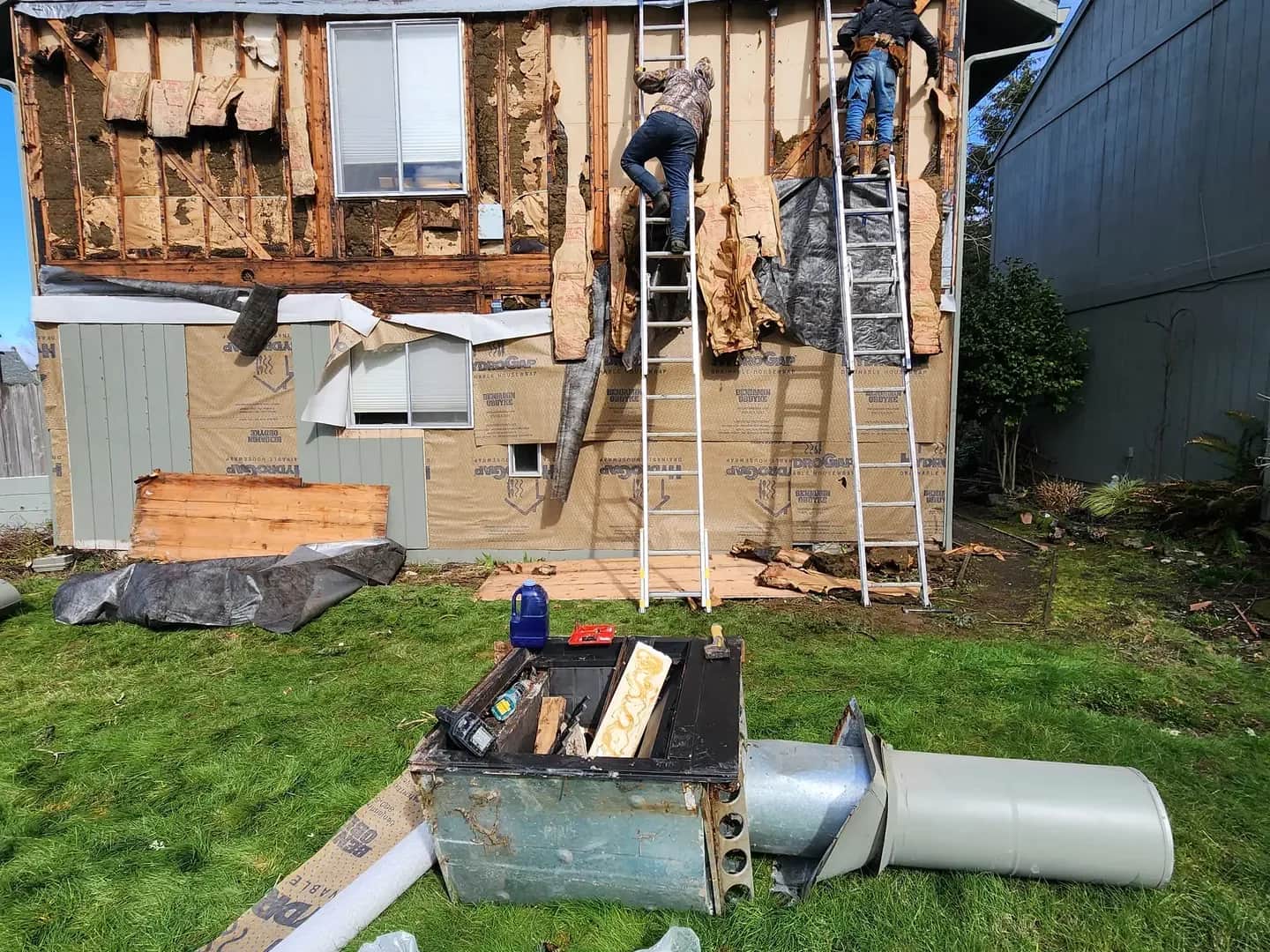
On the build, we tore the roof down to the deck and replaced eleven sheets of OSB where the storm and the slow valley leak had compromised the structure. We installed CertainTeed WinterGuard ice-and-water shield in all valleys, around all penetrations, and at the eave to a point thirty-six inches past the interior wall line. The field went down on CertainTeed RoofRunner synthetic underlayment fastened on a four-inch pattern. Shingles are CertainTeed Landmark Pro in Weathered Wood — a 130-mph wind warranty when installed to spec, which is what we installed to. The ridge ventilation was replaced with a continuous baffled product fastened through the deck into the rafters at every truss, and the intake side was re-cut at the soffit to bring the system into balance. Without intake the exhaust is decorative.
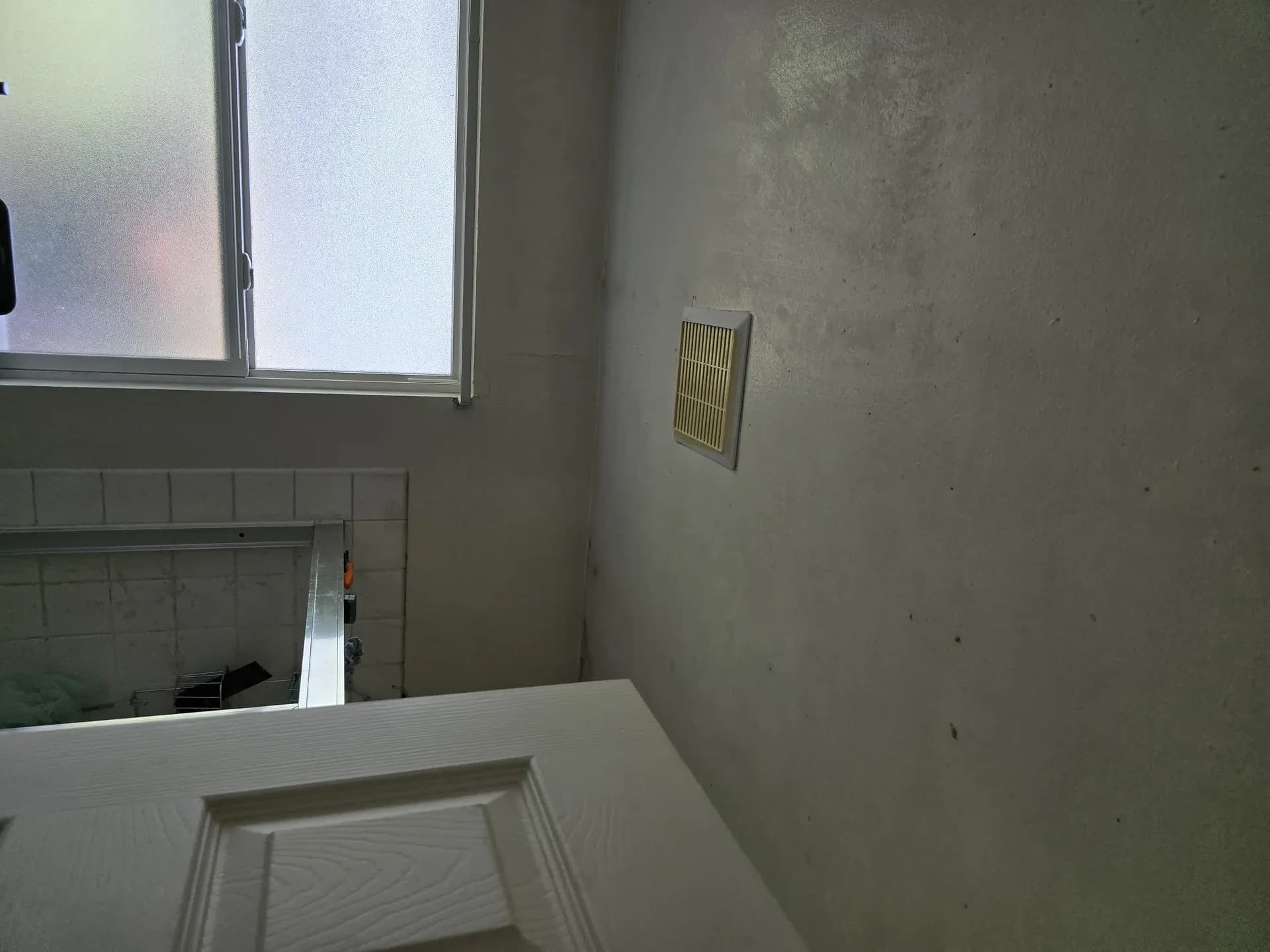
Flashings got the most attention because flashings are where roofs actually fail. The chimney is now step-flashed and counter-flashed in a single piece of 26-gauge galvanized, kerf-cut into the masonry and sealed with a polyurethane sealant rated for the substrate. The plumbing boots are CertainTeed Lifetime EPDM. The pipe vents got new collars. The whole package was registered for the CertainTeed Integrity Roof System warranty under the SELECT ShingleMaster designation — fifty years on the material, fifteen years on the workmanship, both backed by CertainTeed rather than just by us.
Materials & specs
What we put on this house
CertainTeed Landmark Pro architectural shingle
Weathered Wood, Class A fire, up to 130-mph wind warranty when installed to CertainTeed Integrity Roof System specification
Industry-standard architectural shingle with the warranty backbone the SELECT designation unlocks.
CertainTeed WinterGuard ice-and-water shield
Installed in all valleys, around all penetrations, and at the eave to 36 inches past the interior wall line
The single biggest miss on the original 2008 install. WinterGuard is the difference between a slow valley leak and a dry attic.
CertainTeed RoofRunner synthetic underlayment
Full coverage over the entire deck, fastened on a 4-inch perimeter / 8-inch field pattern with capped nails
Tear-resistant, walkable, lays flat. Felt curls in PNW humidity. Synthetic does not.
CertainTeed continuous baffled ridge vent
Fastened through the deck into rafters at every truss, paired with re-cut continuous soffit intake
Exhaust without intake is decorative. The balanced system extends shingle life.
26-gauge galvanized step + counter-flashing
Kerf-cut into masonry, sealed with polyurethane sealant rated for the substrate
Step-flashing is the only correct way to flash a chimney. Face-nailed flashing — what was there — fails by year five.
K-style 5-inch seamless aluminum gutter + 3x4 downspouts
Hidden hangers fastened to fascia every 24 inches, with leaf protection at the rear elevation under the maple
Storm-damaged gutters were replaced as part of envelope; downspouts upsized from 2x3 to 3x4 to handle the actual rainfall this house sees.
What was tricky
Insurance was the first complication. The carrier's initial scope priced the loss as a partial repair — about twenty squares — based on a desktop assessment of the photos the homeowners had emailed in panic the morning after. Our documentation package and the on-roof walk with the adjuster moved that to a full replacement, but it took two weeks for the supplement to be approved. We held the deck under tarp the entire time, checked the tarp after the next two rain events, and resisted the (real, tempting) pressure from the family to just start work on a partial scope. Starting partial would have voided their right to claim the rest of the loss. We told them so, and they waited with us.
The second was weather. We had a four-day forecast window when the supplement cleared. The crew started Friday at first light with a five-person team and the goal of dry-in by Saturday night. We made it by Saturday at 4:15 PM. Sunday and Monday we lost to rain. We came back Tuesday with the full crew and finished shingles, flashings, ridge, and gutters across days nine through eleven. Eleven days on site, not eight, because we did not work a roof in measurable rain. We do not promise schedules we know we will break.
The third was the chimney. When we pulled the existing counter-flashing we found that the masonry crown had cracked and was actively wicking water through the brick. That was not in the original insurance scope and was not strictly storm damage — it was deferred maintenance the storm had exposed. We documented it, called the owners onto the roof to look at it themselves, and quoted the crown repair as a small change order outside the insurance scope. They approved it the same hour because they could see the problem. If we had not opened the flashing, the new roof would have leaked through the chimney within the year and they would have called us back, angry, and we would have deserved the call.
Schedule
Week by week
- Day 0Storm event
Wind event peels back ~40 squares of shingles overnight.
- Day 1Triage + document
Synthetic tarp system installed over exposed deck; 4K photo documentation package compiled and sent to carrier same day.
- Day 5Adjuster walk-through
Estimator on roof with adjuster; full loss documented in real time, supplement requested.
- Week 2-3Insurance supplement
Supplement approved for full replacement scope including deck repair, ice-and-water, and ridge ventilation upgrade.
- Day 1 (build)Tear-off + deck repair
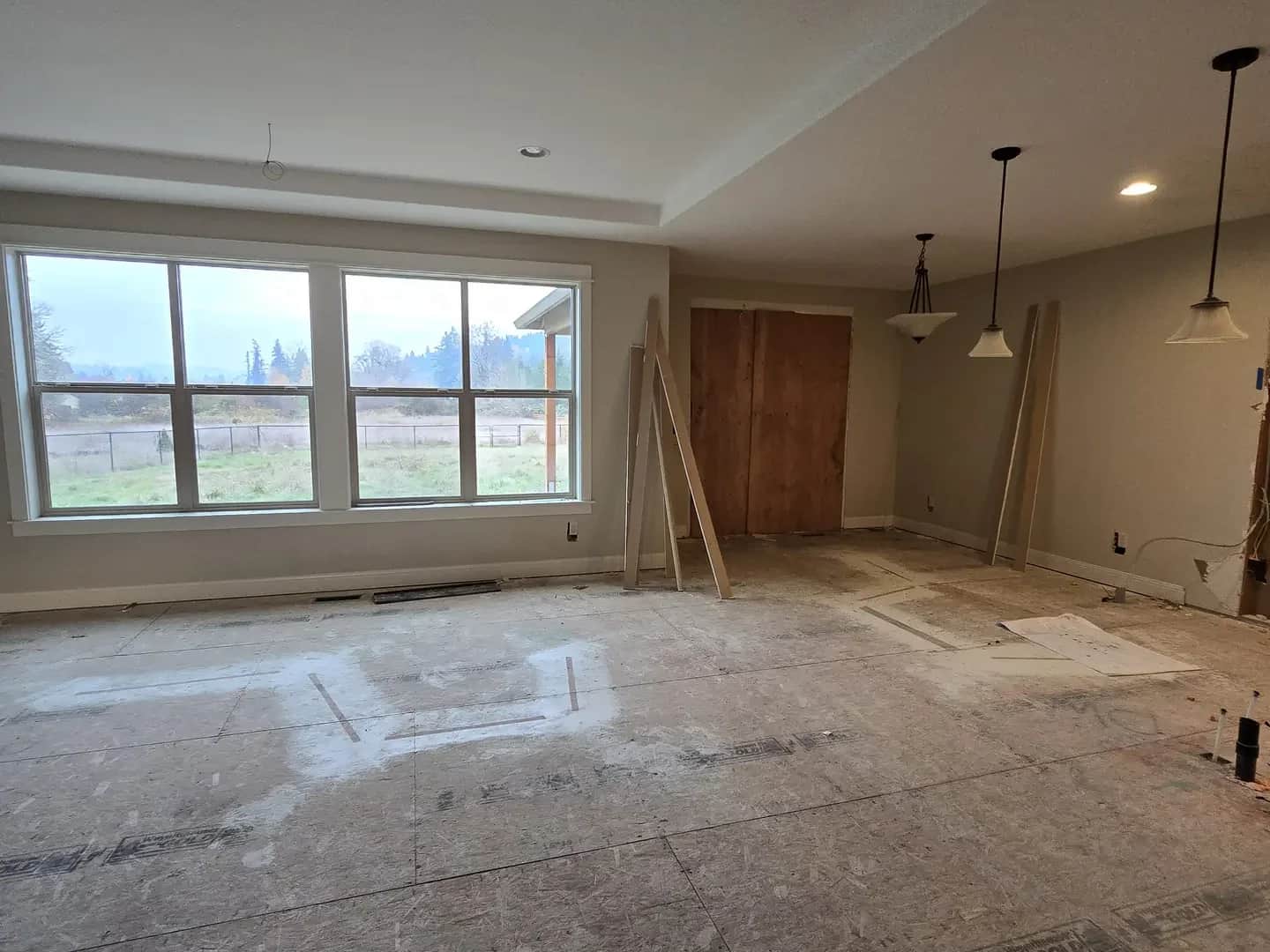
Complete tear-off, deck inspection, eleven sheets of OSB replaced at compromised areas.
- Day 2Dry-in
Ice-and-water shield in valleys and at eaves, full synthetic underlayment, all penetrations sealed by end of day.
- Day 3-6Weather hold + shingle install
Two days lost to measurable rain; resumed shingle install with full crew on day 5.
- Day 7-8Flashings + ridge
Chimney step- and counter-flashing, plumbing boots, ridge ventilation install, soffit intake re-cut.
- Day 9Chimney crown change order
Cracked crown discovered under old flashing; repaired same-day as approved change order.
- Day 10Gutters + downspouts
K-style aluminum gutters and 3x4 downspouts installed; leaf guards at maple-side elevation.
- Day 11Cleanup + final walk
Magnetic sweep, dump-trailer haul-off, final walk with owners, CertainTeed warranty registration filed.
Process gallery
On the job
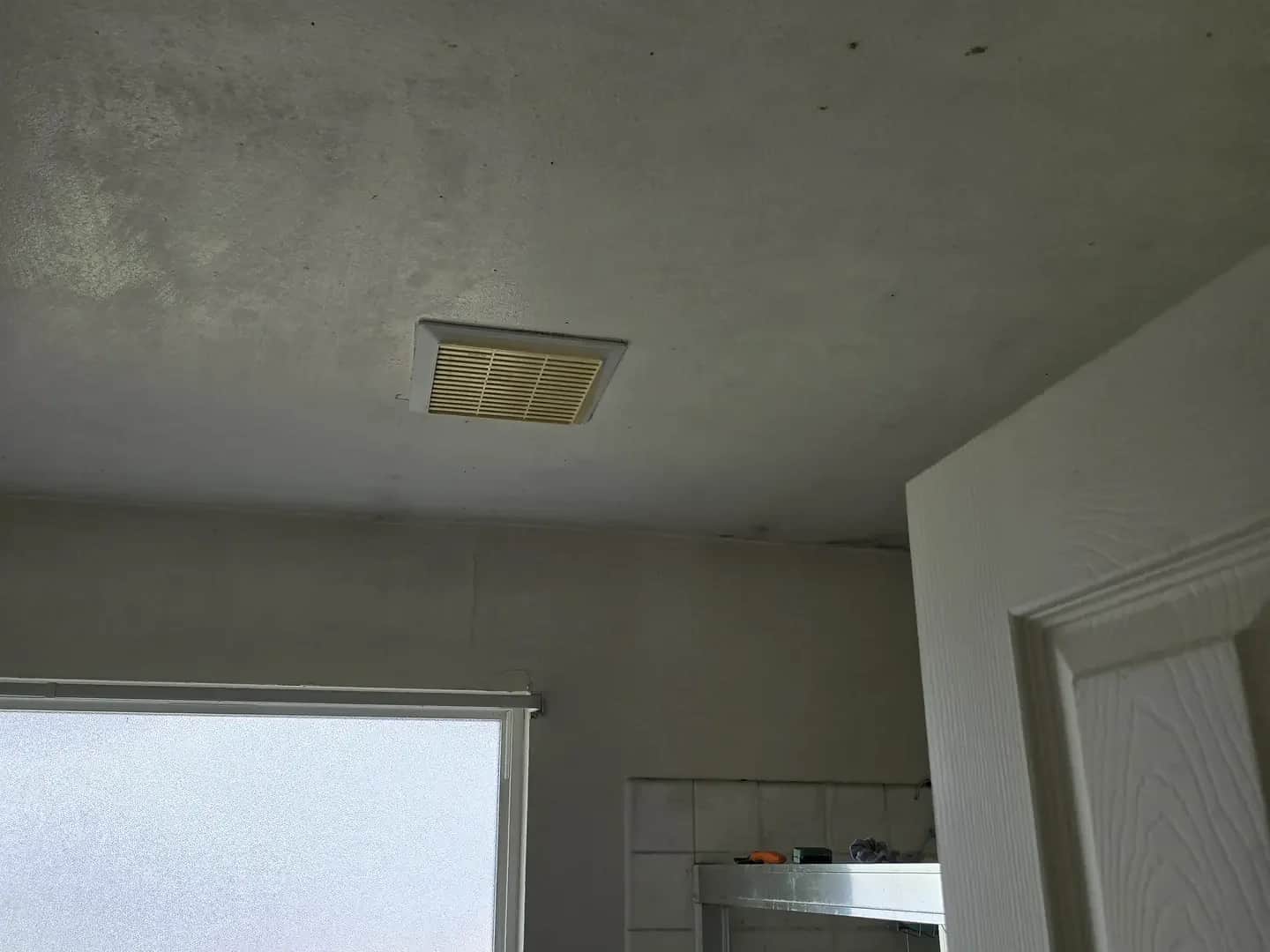
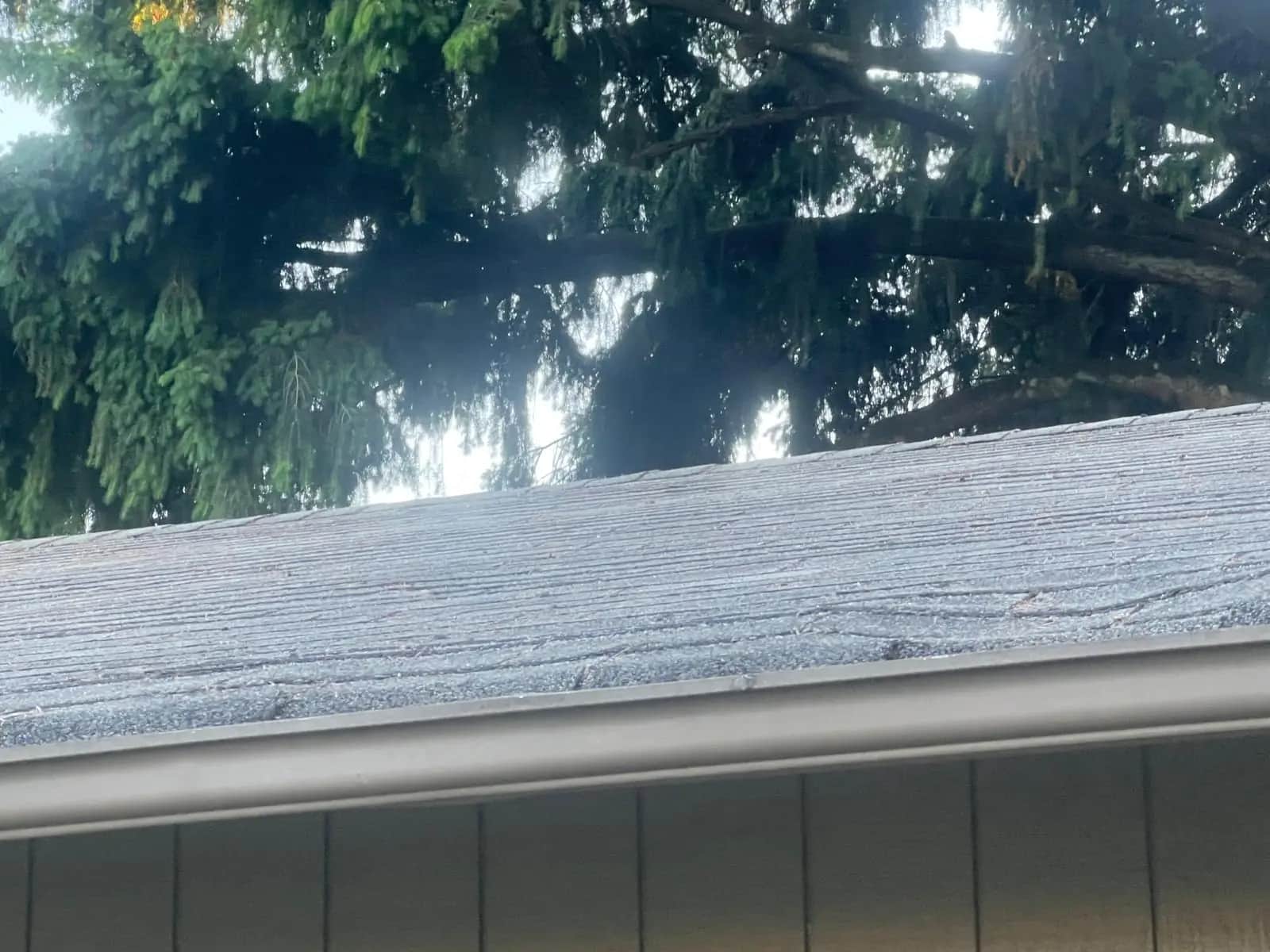
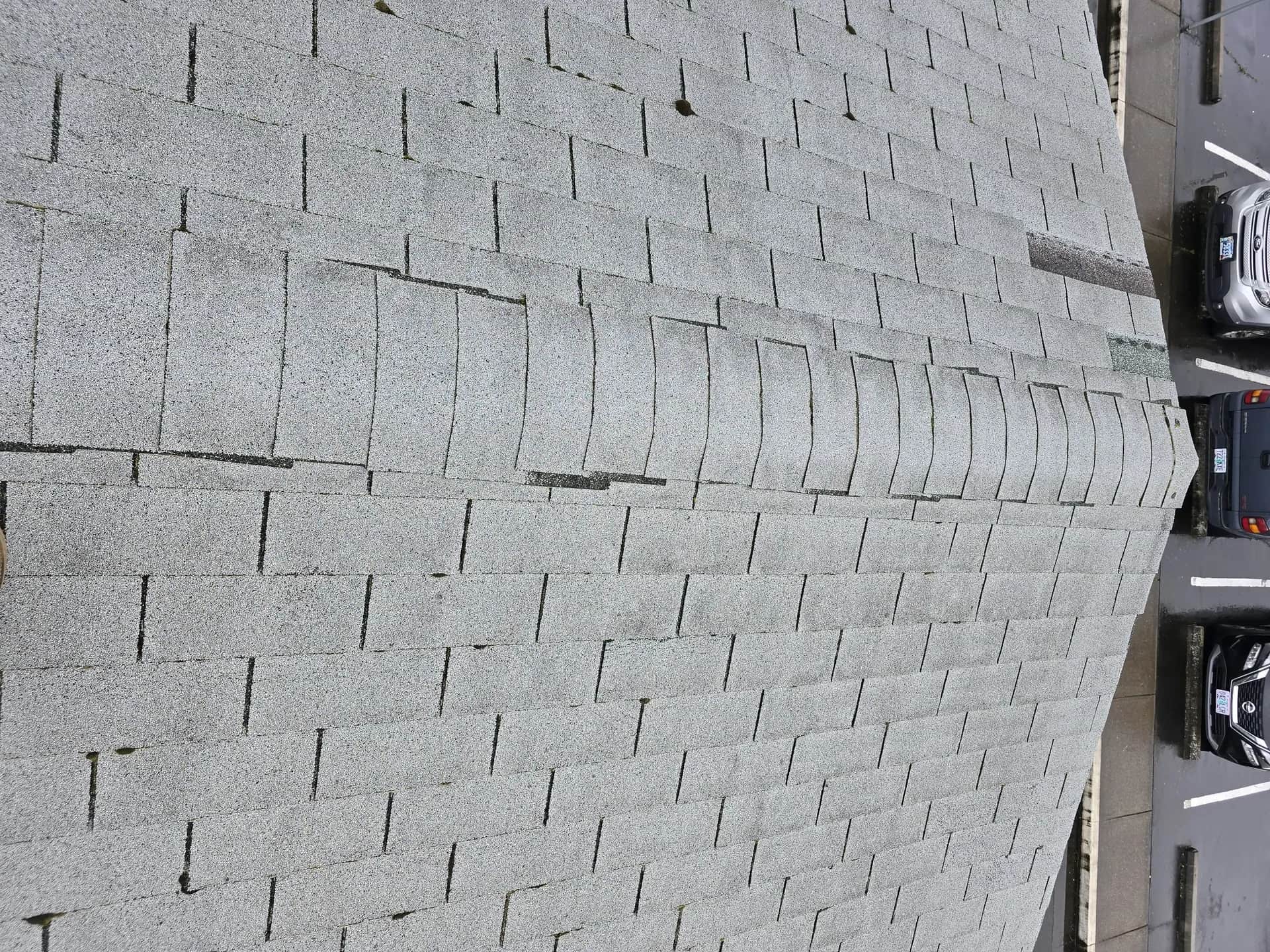
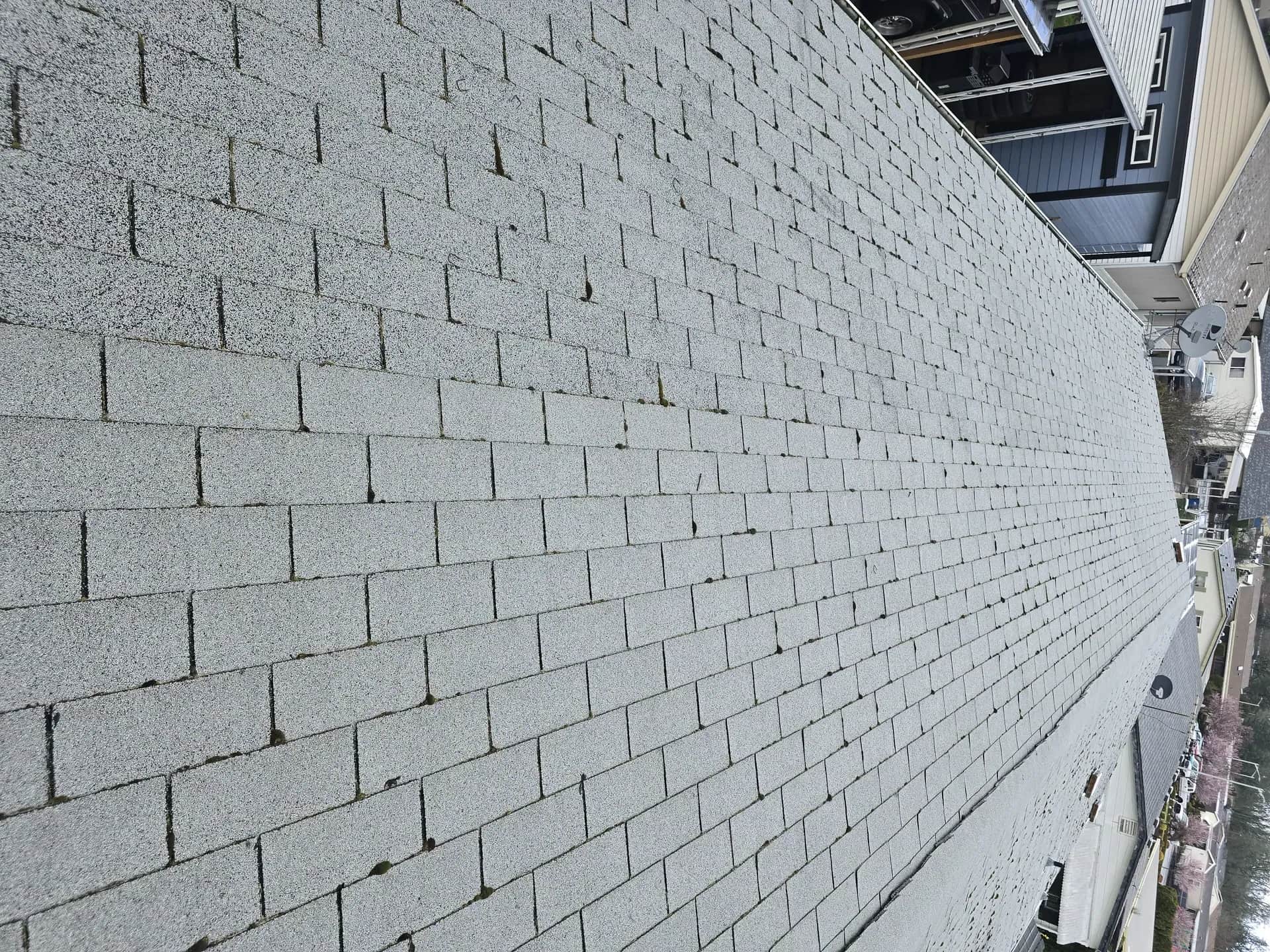
The result
The roof has now ridden out two named atmospheric river events and one March windstorm with sustained gusts in the high 60s. Zero callbacks. The attic temperature differential between the ridge and the soffit is reading where the engineering calc said it would read, which means the ventilation is doing what we built it to do. The gutters are flowing. The chimney crown is sealed. The CertainTeed Integrity Roof System warranty is registered in the family's name with confirmation in their inbox.
The insurance settlement covered everything except the chimney crown change order, which the family expected and budgeted. The roof field is the same color as the neighbor's two-year-old Green O roof, which the homeowner appreciated because she had been worried about a color mismatch from a discontinued shingle line. Landmark Pro Weathered Wood is current production. It will be current production for the foreseeable future.
What is holding up well: every flashing detail, every fastener, the new intake ventilation. What we caught that the original installer missed: ice-and-water in the valleys, a real starter strip at the eave, proper chimney step-flashing. What we would not change: the decision to wait for the full supplement instead of starting on a partial scope. The right answer is not always the fast one.
Credentials applied
Which licenses and certifications did the work
- CertainTeed SELECT ShingleMaster 4-StarUnlocks the 50-year material / 15-year workmanship warranty registered in the homeowner's name.
- CCB #204939Licensed for the full residential envelope work; no permits subbed to a roofing-only license.
- OSHA fall protection certified crewRequired for steep-pitch tear-off; no rope-cutting shortcuts on a wet deck.
- Insurance restoration experience (17 years)Estimator on the roof with the adjuster — not the contractor handing the adjuster a clipboard from the driveway.
- Energy Trust of Oregon Preferred ContractorBalanced ventilation upgrade documented for any future attic insulation incentive.
Want similar work?
We do this every week. Bring us the next one.
Free inspection. Honest scope. Warranty registered in your name.
Disclaimer. Composite case study based on representative Green O projects. Client details anonymized; no individual client is identified. Material specifications reflect Green O’s standard install practice and may vary by project scope, code cycle, and manufacturer availability. CCB #204939 (Oregon). CertainTeed warranty terms are set by the manufacturer and registered per qualifying install. Photography from the Green O project archive; not necessarily from this specific composite project.