
Roofing · Storm Recovery
Storm-Recovery Roof Replacement
A Portland roof that lost shingles to a winter windstorm, torn off to the deck and rebuilt as a complete system: underlayment, flashings, balanced ventilation, and architectural shingles installed to manufacturer spec.
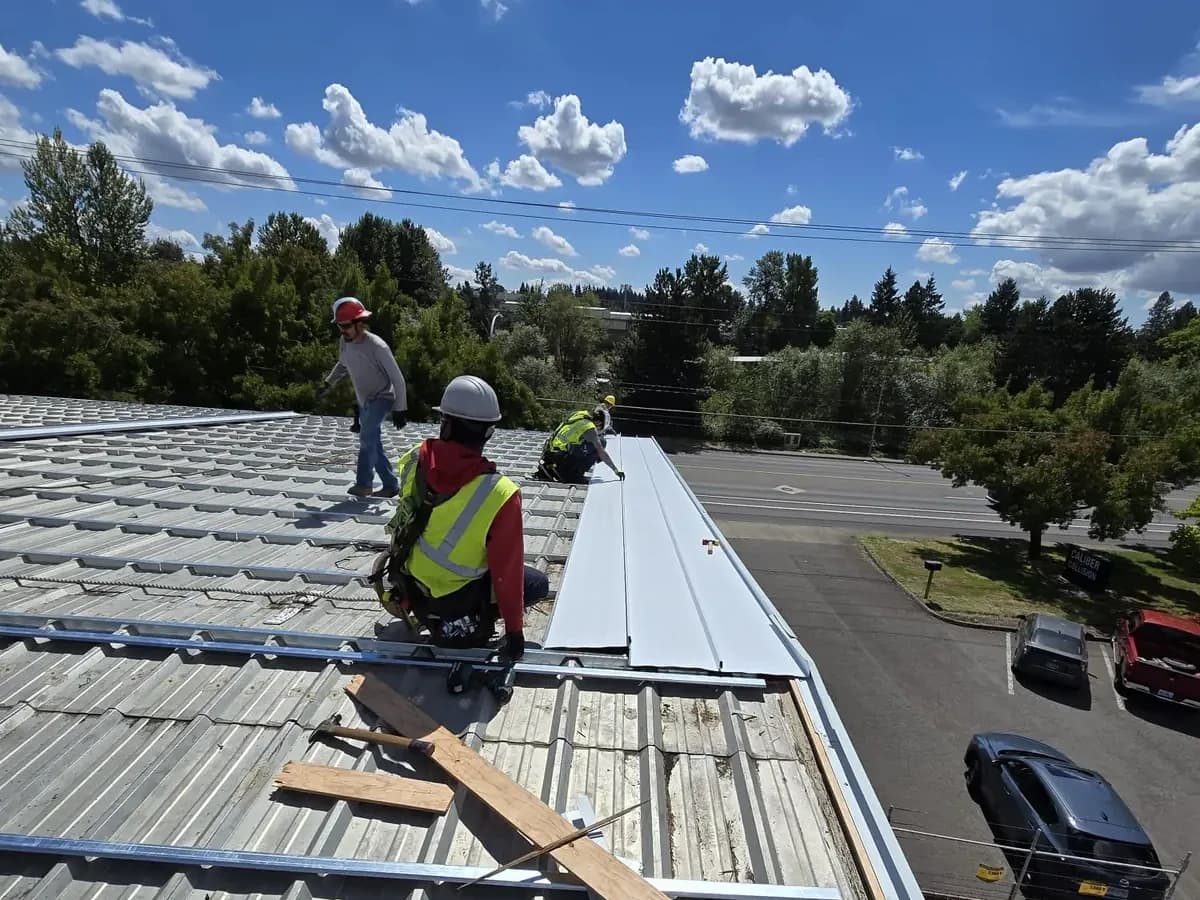
- Location
- Portland, OR
- Size
- Single-family residence, full roof system
- Project type
- Roof replacement after wind damage
- Duration
- Under a week on site
- Completed
- Spring 2025
- Credentialed scope
- Full tear-off, deck inspection and repair, synthetic underlayment, ice-and-water membrane at eaves and valleys, architectural shingles, ridge ventilation, flashing, magnetic-sweep cleanup
The challenge
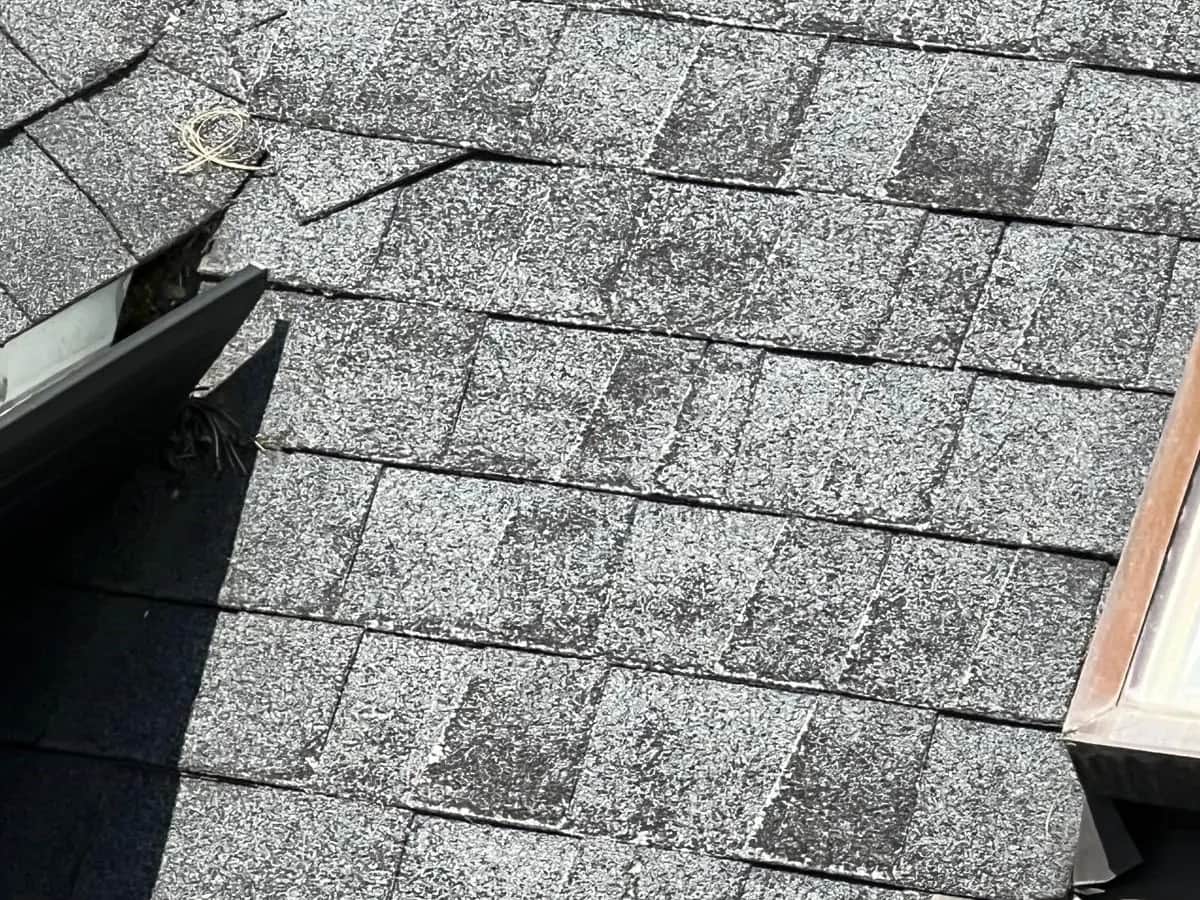
A winter wind event pulled tabs and full shingles out of the field on the windward slope. From the street it looked like a patch job: a few dark rectangles where shingles used to be. From the deck it told a different story - the surrounding field had lifted and re-seated, the sealant bond between courses was broken across a wide area, and the underlayment beneath was original felt at the end of its life.
The honest options were a spot repair that would hold until the next storm, or a full replacement that resets the clock on the whole system. We laid out both, priced both, and explained why a field that has started letting go keeps letting go. The owners chose the system.
“A roof that loses shingles in one storm will lose more in the next. Once the field starts letting go, the honest fix is the system, not the patch.”
Our approach
Tear-off went to the bare deck. Every sheet got walked and probed; the sections that flexed or showed delamination came out and new sheathing went in. A roof is only as good as what it is nailed to.
The rebuild is a layered system, not a shingle job: ice-and-water membrane at the eaves and in every valley, synthetic underlayment across the field fastened with capped nails, new drip edge, new pipe boots and flashings - never reused - and architectural shingles nailed to the manufacturer's pattern, which is what keeps the wind warranty valid.
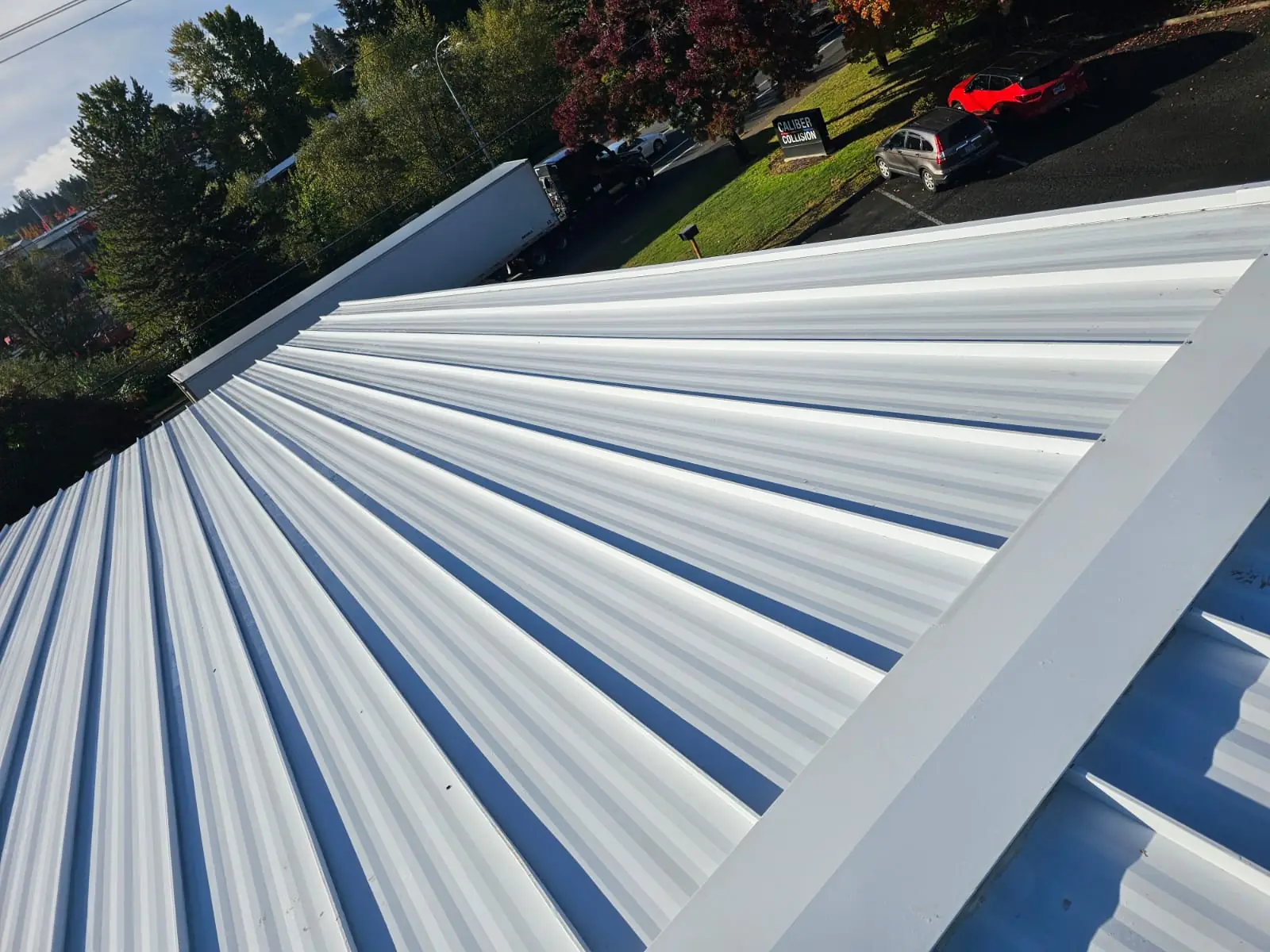
Ventilation got corrected while the roof was open: a continuous baffled ridge vent paired with clear intake at the soffits. Balanced airflow keeps the attic dry in winter and drops shingle temperature in summer, which is what actually extends the life of the new roof.
Materials & specs
What we put on this house
Architectural laminate shingles
CertainTeed Landmark line, installed to manufacturer nailing pattern and spec
Installed to spec by a SELECT ShingleMaster crew, the system qualifies for CertainTeed's strongest registered warranty tier.
Ice-and-water membrane
Self-adhering membrane at eaves and full length of every valley
Valleys and eaves are where PNW roofs actually leak. Membrane there is the difference between an event and a non-event.
Synthetic underlayment
Full field coverage, capped fasteners
Lays flat, walks safe, and does not wrinkle in humidity the way the original felt did.
Continuous baffled ridge vent + soffit intake
Ridge exhaust balanced against cleared soffit intake
Exhaust without intake is decorative. The balanced system dries the attic and extends shingle life.
New flashings throughout
Drip edge, pipe boots, and step flashing all replaced - nothing reused
Reused flashing is the most common shortcut in reroofing and the most common source of the first callback.
What was tricky
Weather, as always in a Portland spring. We do not open more roof than we can dry-in the same day, so the crew sequenced tear-off by slope and had the deck papered before every evening. Two forecast days slid on us; the schedule flexed instead of the standard.
The other complication was the original installation. The valleys had been woven without membrane beneath, and two flashings had been face-nailed and caulked rather than integrated. None of that was storm damage. All of it would have failed regardless. We corrected it because replacing a roof around bad details is not a replacement, it is a countdown.
Schedule
Week by week
- Day 1Tear-off + deck repair
Full strip by slope, deck walked and probed, compromised sheathing replaced, same-day dry-in.
- Day 2Dry-in complete
Ice-and-water at eaves and valleys, synthetic underlayment across the field, new drip edge.
- Day 3-4Shingle install
Architectural shingles to manufacturer nailing pattern, new flashings and boots integrated as courses climb.
- Day 5Ridge + ventilation + cleanup
Continuous ridge vent, soffit intake cleared, magnetic sweep, haul-off, final walk with the owners.
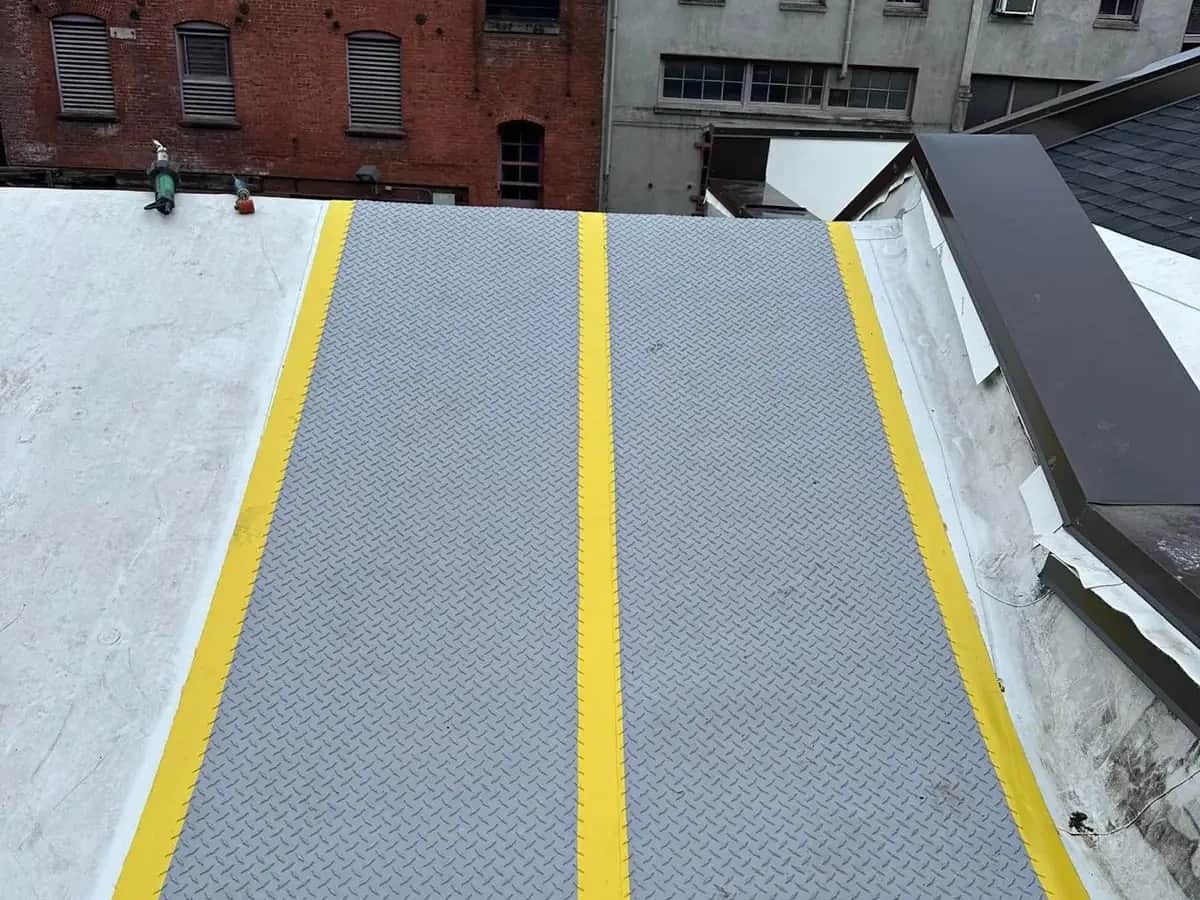
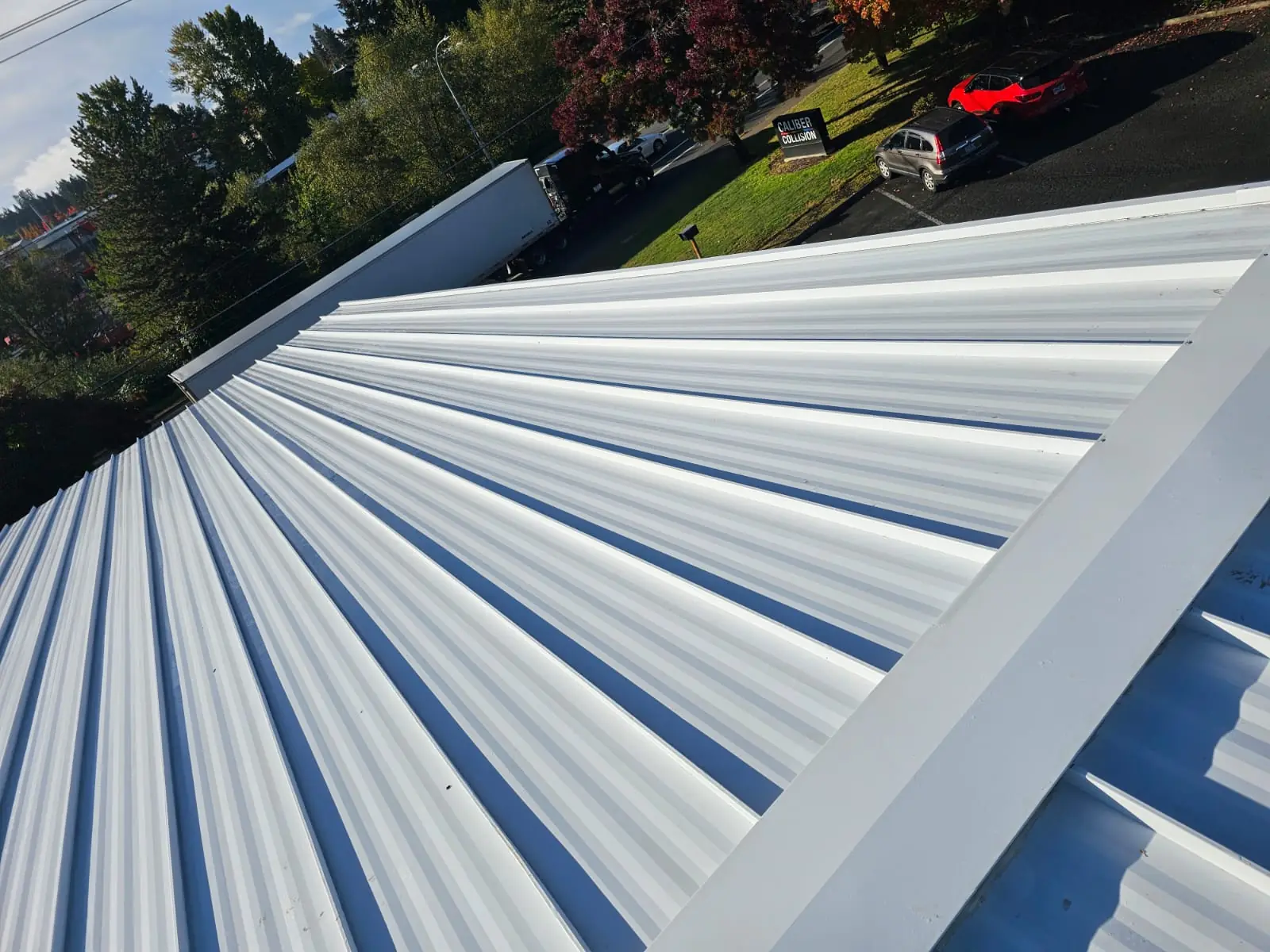
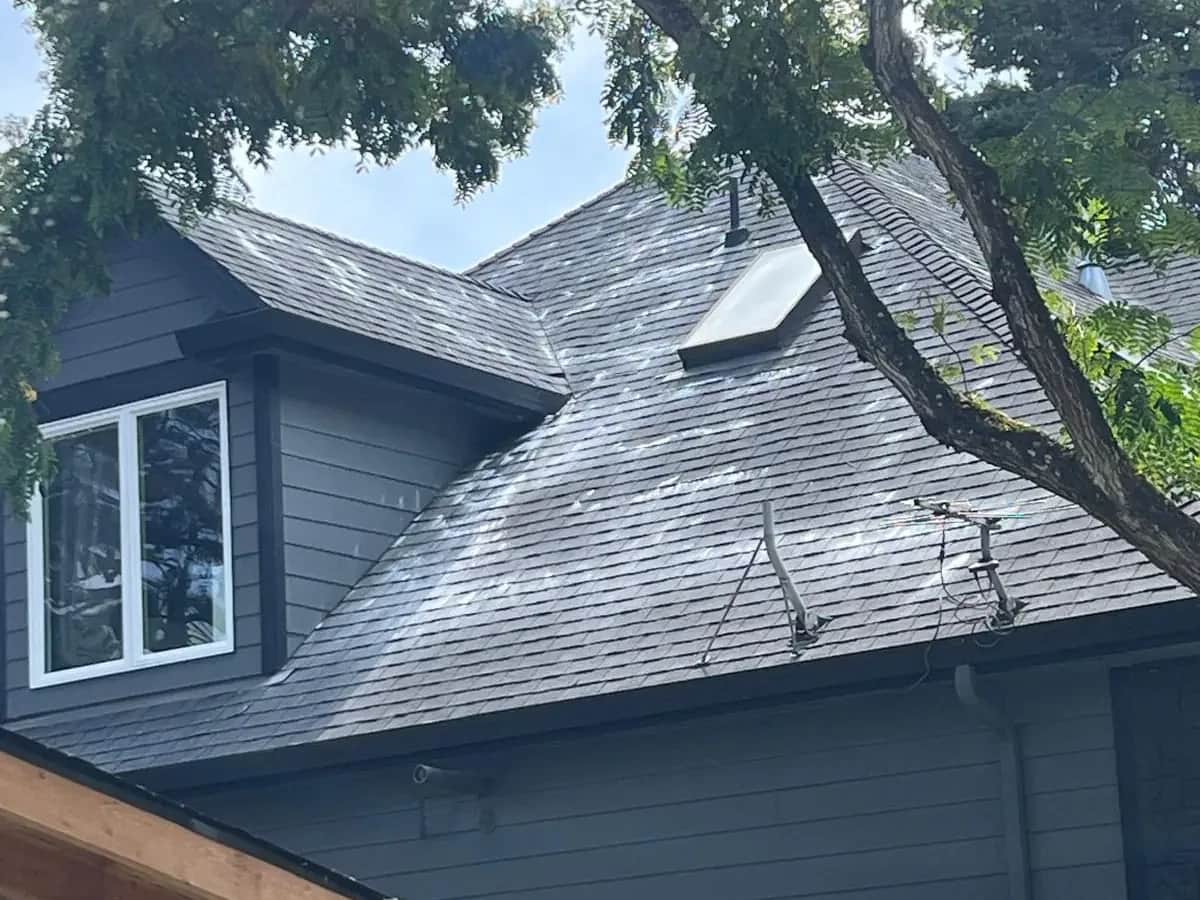
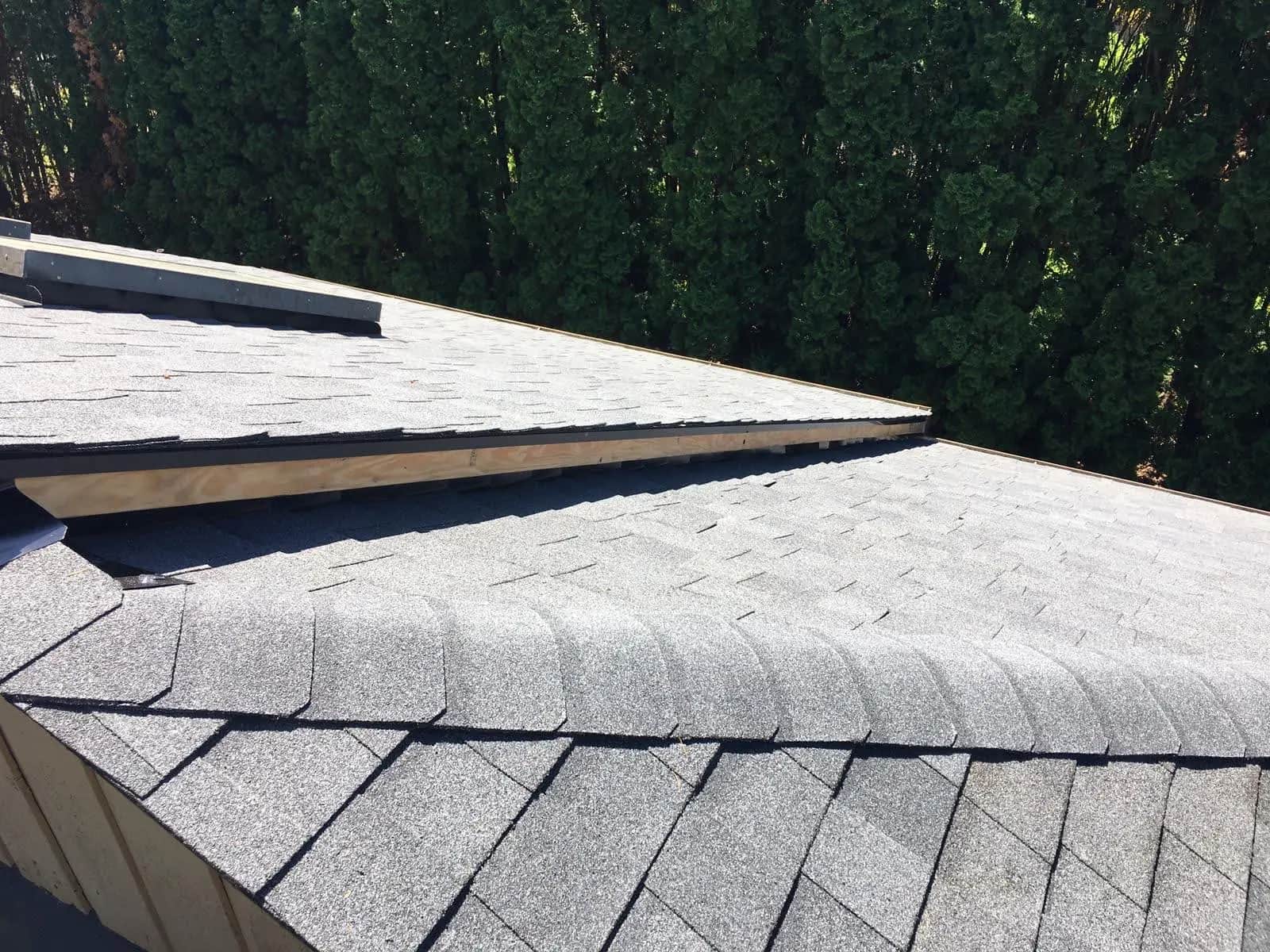
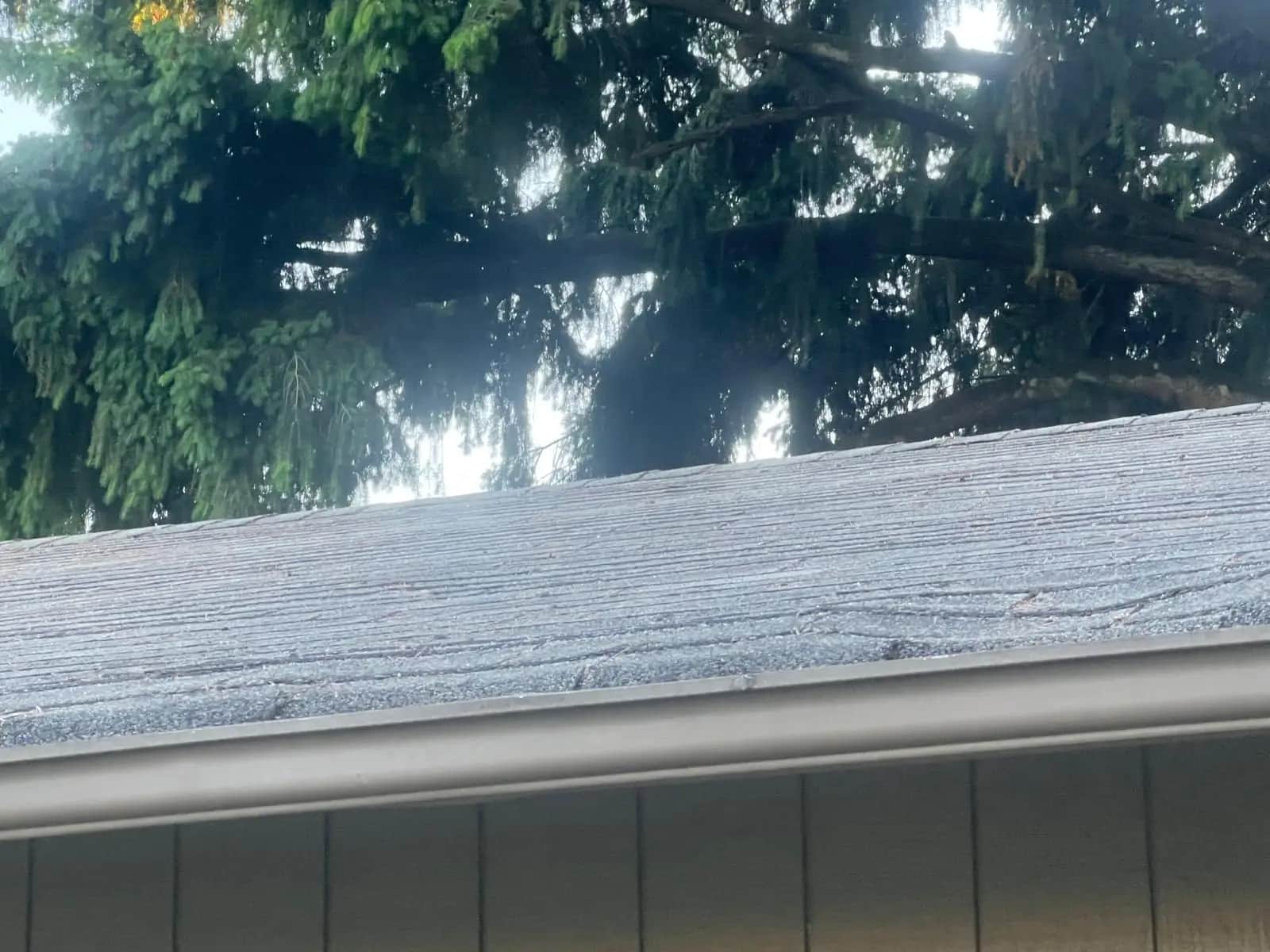
Process gallery
On the job
The result
The new system has since taken multiple atmospheric-river events and a windstorm without losing a tab. Sealant bonds set, ridge vent flowing, attic moisture readings where they should be. Cleanup ended the way every roof we do ends: magnetic sweep of the lawn, beds, and driveway.
What we would tell any owner after wind damage: get on top of it fast, document everything, and judge bids by the system spec, not the shingle color. The parts you never see are the parts that keep the water out.
Credentials applied
Which licenses and certifications did the work
- CertainTeed SELECT ShingleMaster 4-StarManufacturer-audited install quality; unlocks the registered warranty tier on the new system.
- CCB #204939Full-scope license covering deck repair and carpentry, not a roofing-only endorsement.
- OSHA 30 + fall protectionSteep-slope tear-off run on ropes and anchors with documented competent-person oversight.
- 17 years of storm-response workSame-week scoping and documentation so damage is captured before weather compounds it.
Want similar work?
We do this every week. Bring us the next one.
Free inspection. Honest scope. Warranty registered in your name.
Disclaimer. Composite case study based on representative Green O projects. Client details anonymized; no individual client is identified. Material specifications reflect Green O’s standard install practice and may vary by project scope, code cycle, and manufacturer availability. CCB #204939 (Oregon). CertainTeed warranty terms are set by the manufacturer and registered per qualifying install. Photography from the Green O project archive; not necessarily from this specific composite project.